Wind Ratings and Weatherproofing: How Stretch and Sailcloth Tents Handle Extreme Weather
When hosting an outdoor event, launching a commercial resort, or managing a high-volume tent rental business, weather is the single greatest operational wildcard. High winds, torrential rain, heavy hail, and prolonged ultraviolet (UV) radiation present relentless stress to temporary and semi-permanent fabric structures. Equipment failure during a high-profile corporate event, wedding, or festival is not merely an inconvenience—it poses severe safety risks to guests, threatens expensive AV equipment, and creates devastating financial liabilities for venue operators.
Understanding how tensioned canopies interact with severe atmospheric conditions is fundamental to safe site management. Weatherproofing a site requires more than just pulling guy ropes tighter when clouds gather. It demands an engineering-led approach to structural wind ratings, aerodynamic forces, fabric hydrostatic head limits, and site-specific anchoring protocols. This comprehensive technical guide analyzes the aerodynamics, precipitation engineering, UV degradation factors, and emergency weather safety procedures for both high-grade stretch canopies and classic sailcloth tent systems.
Understanding Wind Ratings and Structural Aerodynamics
Wind rating is the certified maximum wind velocity a tent structure can safely withstand without experiencing structural failure, anchor pull-out, or fabric tearing. Commercial stretch tents and high-peak sailcloth structures manufactured to international architectural standards are typically rated to withstand sustained wind speeds of up to 80 km/h to 100 km/h, provided they are rigged on appropriate anchor points according to structural engineering specifications.
However, wind velocity alone does not tell the full story. The dynamic behavior of wind passing over and under a fabric canopy creates complex force vectors that change rapidly during storms.
1. Dynamic Lift (The Bernoulli Effect)
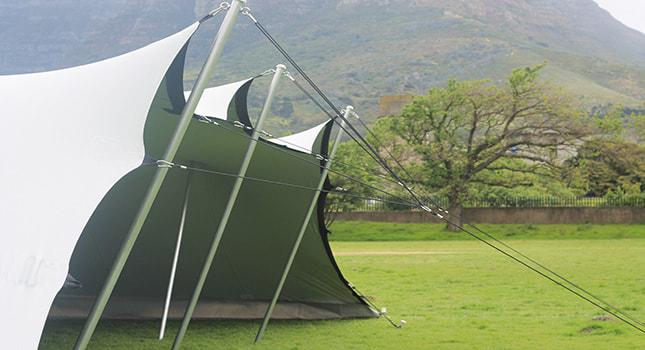
As wind moves across the curved upper surface of a pitched stretch tent or high-peak canopy, it accelerates relative to the air beneath the structure. According to Bernoulli’s principle, this velocity difference drops the air pressure above the canopy membrane, creating massive upward aerodynamic lift. Under 70 km/h wind gusts, a 15m x 20m canopy can experience several metric tonnes of vertical suction force attempting to rip ground anchors straight out of the earth.
2. Internal Drag and Lateral Force
When wind enters an open-sided tent, it exerts direct lateral pressure (drag) against the underside of the fabric and perimeter sidewalls. If wind cannot flow freely through or over the structure, internal pressure builds up, pushing against the roof while pushing perimeter uprights outward. This highlights why structural rigging and perimeter angle setups are non-negotiable safety considerations.
3. Flexible vs Rigid Aerodynamic Response
Stretch tents and sailcloth tents handle wind loads using entirely different physical mechanisms:
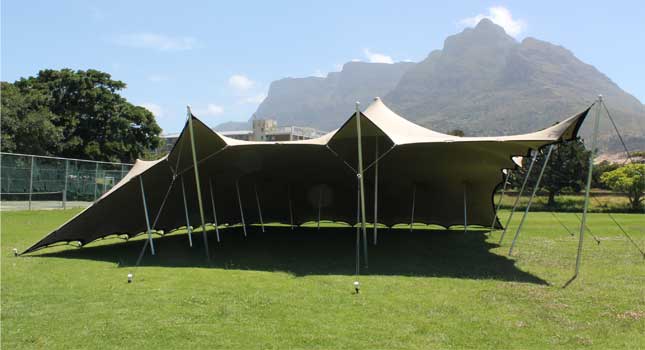
- Stretch Tents (Organic Aerodynamics): Manufactured from high-tensile elastic membranes, stretch canopies flex dynamically under wind pressure. By changing shape slightly during gusts, a stretch tent spills wind energy off its contoured shoulders, reducing localized point loading on poles and anchors.
- Sailcloth Tents (Rigid Tensioning): Traditional sail cloth tents utilize semi-rigid, low-stretch fabrics pulled taught across high center masts. They rely on high initial tension, structural perimeter guy wires, and rigid wood or aluminum uprights to resist wind deformation. To explore the detailed structural differences between these two iconic canopy styles, read our comparison on sailcloth tents vs stretch tents.
Waterproofing Mechanics: Hydrostatic Head and Seam Integrity
Rain protection is a primary requirement for any event canopy, yet many operators mistake simple water resistance for true commercial-grade waterproofing. During prolonged downpours, water does not merely sit on top of fabric; it exerts static and dynamic pressure against the membrane, particularly in areas where water pools or wind drives rain horizontally against sidewalls.
1. Measuring Hydrostatic Head Ratings
Waterproofing capability is measured in millimeters of Hydrostatic Head (HH). A hydrostatic head rating indicates the vertical column of water (in millimeters) that a fabric surface can resist before water droplets press through the weave or coating:
- Standard Camping Tents: 1,500mm to 2,000mm HH (Sufficient for light showers, but fails under heavy pressure).
- Commercial Event Stretch Tents: 5,000mm to 10,000mm+ HH (Provides 100% waterproof protection against heavy monsoon rain and standing water loads).
Commercial stretch fabrics utilize multi-layer composite construction, combining a tough elastomeric outer coating with a waterproof internal Polyurethane (PU) or PVC barrier membrane. This dual-sided coating prevents water absorption, ensuring the fabric does not gain water weight or sag under heavy rain.
2. Preventing Water Pooling (Guttering and Pitch Angles)
Water pooling occurs when fabric loses tension between support poles, creating a low pocket where rainwater collects. As water accumulates, its weight pulls the fabric down further, creating a deeper basin that can cause pole collapse or fabric tearing.
- Maintain Minimum Pitch Angles: Always maintain a minimum roof slope of 20 to 30 degrees across all canopy sections to ensure continuous rainwater runoff.
- Valley and Peak Tensioning: Ensure perimeter guy wires are tensioned evenly. On wide span setups, install intermediate perimeter poles to raise low edges.
- Commercial Rain Gutters: When linking two or more stretch canopies together for large events, join edges using specialized keder joiners or heavy-duty PVC rain gutters sealed with industrial velcro.
Wind and Storm Preparation: Essential Hardware for High-Load Rigging
A tent structure is an integrated system; a weakness in a single shackle, stake, or guy line compromises the entire setup. Preparing for extreme weather requires heavy-duty hardware rated for high structural loads.
1. Ground Anchor Safety Factors
Standard 400mm smooth steel stakes are unsuited for extreme weather setups. High-wind protocols require heavy-duty 800mm to 1000mm ribbed rebar or cross-flange steel pegs. In loose topsoil or sand, deployment of multi-peg inline picket systems (tandem pegging) or helical screw anchors is required to double pull-out resistance. View our range of commercial steel stakes in our peg anchoring accessories section.
When installing semi-permanent rigs on hard paved surfaces or concrete foundations, replace ground pegs with mechanical expansion bolts or chemical anchors sourced from our permanent tent installation accessories inventory.
2. High-Tensile Webbing and Rated Hardware
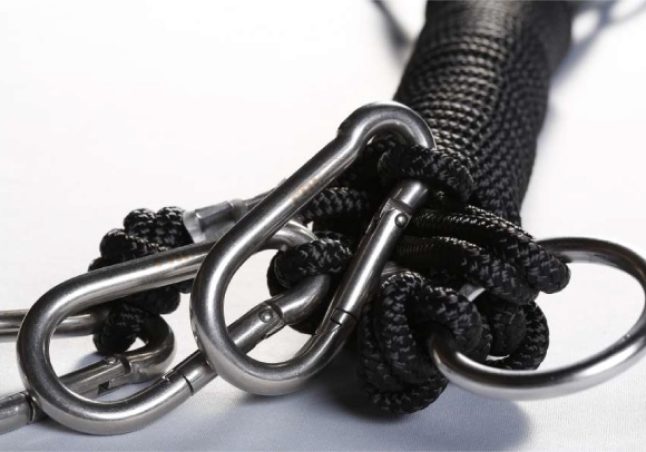
Replace light elastic ropes with static 25mm to 50mm heavy-duty polyester ratchet webbings featuring breaking strengths of 2,000 kg to 5,000 kg. All connections between guy lines, perimeter tabs, and ground anchors must utilize rated steel bow shackles or drop-forged carabiners. Avoid cheap cast-iron utility snaps that snap under shock loads. Stock up on certified rigging hardware from our rope carabineers and related accessories catalog.
3. Pole Stability and Baseplate Lockdown
Under heavy wind lift, center poles can momentarily unweight at their bases. If a pole base shifts off center during a wind gust, the pole will fall when the canopy drops back down, causing immediate collapse. Always lock pole bases into heavy-duty spiked or rubber-padded baseplates, and secure center pole tops using fabric dome caps from our pole related tent accessories range.
Managing Sidewalls and Micro-Climates During Storms
Perimeter sidewalls protect guests from wind-driven rain and freezing temperatures, but installing walls alters the aerodynamic profile of your structure. To learn when and how to deploy wall panels safely, consult our complete guide on stretch tent sidewalls when and why you need them.
1. The Windward vs Leeward Sidewall Rule
During severe gale-force winds, improper sidewall management can damage your structure:
- Close the Windward Side: Always install solid sidewalls on the side facing into the incoming wind. This creates a windbreak that prevents gusting winds from blowing underneath the canopy and creating upward lift.
- Keep the Leeward Side Partially Open: Leaving openings on the downwind (leeward) side allows air that enters the tent to escape freely, preventing internal pressure buildup.
- Never Close All Four Sides Without High-Capacity Anchoring: Fully sealing a tent creates a solid box that catches maximum wind drag. Ensure all perimeter anchor points are reinforced before closing all four walls during a storm.
This principles apply equally to semi-permanent hospitality venues and luxury glamping resorts. Operators managing resort developments can review specialized structural enclosure standards in our guide for luxury glamping tents South Africa.
Sun, UV, and Thermal Degradation: The Silent Weather Threat
While storms cause dramatic equipment damage, solar UV radiation causes silent, continuous structural degradation. High UV exposure breaks down synthetic polymer chains in low-grade fabrics, causing them to lose elasticity, fade in color, and tear under routine tensioning.
1. Protection Against UV Degradation
High-grade architectural fabrics feature UV-inhibiting additives blended directly into the outer PVC/PU coatings. These UV blockers reflect and absorb ultraviolet rays, preventing internal yarn breakdown. Premium stretch fabrics maintain structural integrity for thousands of exposure hours, even in high-UV environments like South Africa.
2. Mold, Mildew, and Post-Storm Maintenance
Packing away a wet stretch tent after a storm is the leading cause of mold growth, fabric rotting, and foul odors. Fungal spores digest organic dirt trapped in wet fabric fibers, causing black stains that weaken waterproof coatings.
- Never Leave Fabric Wet in Storage: If forced to pack down during rain, unroll and hang the canopy in a ventilated warehouse within 24 to 48 hours to dry completely.
- Regular Cleaning Protocols: Wash off organic debris, salt spray, and mud using soft brushes and dedicated pH-neutral canvas cleaners. Follow step-by-step drying instructions in our guide on how to clean and maintain a stretch tent.
- Protecting Hardware: Treat steel ratchets, carabiners, and stakes with protective anti-corrosion sprays before storage using products from our general tent maintenance accessories collection.
Emergency Weather Safety Plan for Event Technicians
Every commercial event operator and venue manager must maintain a written Emergency Weather Action Plan (EWAP). Field crews must be trained to execute safety protocols when severe weather warnings are issued.
Weather Action Matrix
| Wind Speed Range | Environmental Indicators | Required Operational Action |
|---|---|---|
| 0 – 40 km/h | Light to moderate breeze; flags flutter | Normal event operations; routine tension checks. |
| 41 – 60 km/h | Fresh breeze; large branches move; umbrellas lift | Inspect all guy ratchets and ground pegs; seal windward sidewalls; clear loose decor. |
| 61 – 80 km/h | Gale force; whole trees in motion; walking difficult | Evacuate guests from structure; lower center poles slightly to reduce profile if safe; double-anchor main lines. |
| 80+ km/h | Severe storm / Structural threat | Total site evacuation; drop canopy completely to ground level if crew safety permits. |
Planning and Sizing for Weather Resiliency
Designing a weather-resilient setup begins long before arriving on-site. Choosing the correct tent dimensions ensures adequate space for perimeter guy wire angles (ideally 45 degrees) and allows safe clearance from surrounding trees and buildings.
To accurately compute your site layout, line clearance offsets, and capacity requirements before pitching, consult our master stretch tent planning guide south africa or use our sizing guide on how to choose the right stretch tent size for your event.
By pairing architectural-grade canopies with heavy-duty rigging hardware, proper anchoring mechanics, and active weather management, event professionals can operate safely through challenging seasonal conditions. To view real-world examples of extreme weather installations, explore our project gallery. Learn more about our engineering standards on our about us page, or reach out to our technical rigging specialists via the contact page for tailored safety and hardware consultations.