How to Choose the Right Stretch Tent Size for Your Event

Choosing the right stretch tent size isn’t something you should guess. Get it wrong and you’ll either be cramming people shoulder to shoulder, or paying for space you’ll never use. Good stretch tent sizing is practical — it should match your event style, layout, weather risks, and your budget.
Start with the Big Picture: What’s the Event?
Most people focus on guest numbers first, but context matters just as much. A relaxed cocktail party with guests coming and going needs less covered space than a sit-down wedding with tables and a dance floor. A product launch might have a stage, a sound desk, lighting rigs — suddenly you’ve lost 20 square metres you thought you had. Before you worry about sizes, nail down your event flow.
Break Down Your Guest Headcount Properly
Some venues and tent hire guides throw out rough estimates like “one guest per square metre.” That’s fine for standing room only, but people rarely stand still for hours. If you’re planning a seated dinner, expect to allow 1.2 to 1.5 square metres per person, depending on table sizes and space between them. If you’re including a dance floor, add another 0.5 to 1 square metre per dancer. And don’t forget buffet stations, bars, or display tables — they chew up floor space too.
Use Real Examples to Visualise It
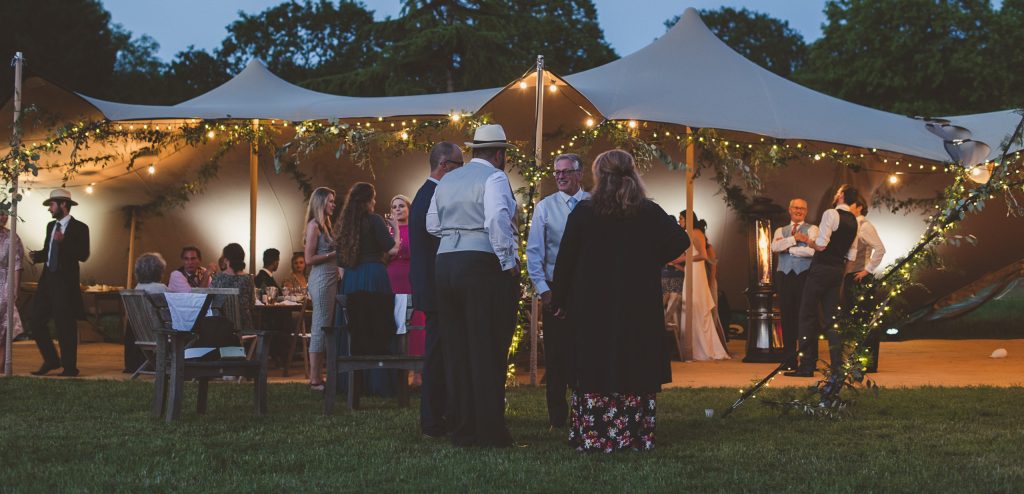
Let’s say you’re planning a wedding for 120 people. You want a seated reception with round tables, a dance area, and a small stage for speeches. A typical 15m x 20m stretch tent — about 300 square metres — will cover this nicely, with room to move around and anchor points that won’t feel cramped. Now flip that to a cocktail-style birthday party for 50 guests — you might get away with a 7.5m x 10m tent, around 75 square metres, if the weather’s good and people can mingle outside too.
Think About Weather — Not Just on the Day
South Africa’s weather is famously unpredictable. A clear sunny afternoon can turn windy and wet in a few hours. If you’re planning an event in the Cape or anywhere with a coastal breeze, allow for sidewalls. Sidewalls can add wind protection and make smaller tents more usable — but they also change how you’ll rig and anchor the tent. Don’t cut corners here. Always speak to your tent supplier about local weather patterns and what extra precautions they recommend.
Layout Makes or Breaks Space
Here’s where people underestimate things. A stretch tent’s beauty is its flexibility — it can be anchored in unusual shapes to dodge trees, buildings, or landscape obstacles. But weird shapes can eat up floor area. Rigging poles can also affect where you put tables or stages. A professional rigger will show you different anchor points to get the best flow. If you’re hiring furniture, check the sizes — giant round tables versus trestle tables can change your floor plan dramatically.
Don’t Forget Your Site Surface
Is your tent going on grass, paving, sand, or concrete? Each one affects how much usable space you get. Soft lawns can get muddy in rain. Beaches or uneven ground can mean you need extra flooring to keep tables stable. If you want a neat, dry surface, flooring might eat into your budget — but it’s worth it for guest comfort.
Trust a Tent Size Guide — But Don’t Treat It as Gospel
Guides are a smart starting point. Here’s a quick example from our stretch tent size options:
| Size (m) | Standing / Cocktail | Seated at Tables |
|---|---|---|
| 7.5 x 10 | Up to 50 guests | 30–35 guests |
| 12 x 10 | 80 guests | 50 guests |
| 15 x 10 | 100 guests | 85 guests |
| 15 x 20 | 200 guests | 150 guests |
Remember, real life doesn’t always match charts. A local supplier can help tweak sizes to suit your venue and avoid awkward dead space. They’ve likely seen every layout mistake under the sun — use their experience.
Ask About Linking Tents for Flexibility
One smart option for bigger or more complex events is linking multiple stretch tents together. This works well if you need separate zones — maybe a covered bar area next to a dance floor. You can also add or remove sections to match changing guest numbers. This keeps your budget realistic without under-covering or over-covering your space.
Common Mistakes People Make
One of the biggest? Underestimating the impact of décor. Flowers, backdrops, stage props — they all take space. So do camera crews, DJs, and catering teams. Another mistake is forgetting about flow: your guests need space to move between tables or through doorways without bumping into poles or ropes. It sounds obvious until it goes wrong.
Bring It All Together — Then Get a Second Opinion
Once you’ve sketched your dream layout, run it past a supplier who knows stretch tents inside and out. They’ll flag what works and what doesn’t. Better to tweak it now than stress when your tent is half up and the stage is too close to the sidewall.
Where to Next?
There’s no one-size-fits-all. Every event has its quirks. But if you take time to think through your guest count, flow, and weather — and talk to someone who’s done it all before — you’ll get a stretch tent that fits just right.
Ready to plan? Check out our stretch tents for sale South Africa and see which size works best for your next function. And if you’re still not sure, get in touch. We’ll help you figure it out.